Showing posts with label reading. Show all posts

Sunday, November 4, 2012

A Contradict View towards evolution of E-Books

I still remember the days where we complain of backaches due to the heavy bags which we have to carry to school. School bags are often damaged due to excessive weight from those thick and old textbooks carried inside it.

Today, most students especially in tertiary education goes to university empty handed. The reason behind this is due to the emergence of e-books and digital forms of their textbooks which can be accessed through their PCs, Ipads, Tablets and even smart phones.

E-books in the eyes of Westerner


Credits: Lowyat


Looking at the Western countries, e-books are well-accepted and that change the way the whole publication industry works. The traditional hardcover publication is decreasing year by year as most readers turned to e-books. According to the report by the Association of American Publishers, "the net sales revenue from e-books exceeded that of hardcover books in the first quarter of the year" (cited in Indvik 2012).

Acceptance of E-books

E-books is accepted well due to several reasons.

The rapid introduction of new technologies in those countries has contributed to e-book's popularity. As mentioned by Streitfeld (2012), "electronic books have been around for more than a decade, but took off only when Amazon introduced the first Kindle e-reader in 2007".

Credits: Pocket-lint

The e-reader has eased the user's convenience in locating and reading those e-books. Today, the e-reader also provides many functions such as downloading songs, movies and videos. Users are also offered a variety of e-readers device to choose from such as  Sony e-reader and Apple's Ipad. As many choices of e-reader device dominates the market, it seems to have become a trend that everyone have to follow so as to become up-to-date in society.

Also, there are more choices of books available through e-books compared to the hard copy due to the absence of publishers. As many authors are often rejected by the publishers to publish their book, they now can publish their own piece of inspiration online and make available to all readers. It works by "digitally format their own manuscript, set a price and sell it to readers through a variety of online retailers and devices" (Donahue 2011). Therefore, readers can access more publications online while authors can easily get their manuscript published and reach its users easily. 


E-books in Malaysia


On the other hand, here in Malaysia; the opposite effect occurs. E-book have a slow increase in sales revenue here compared to the Western countries. This shows that the Asian people has yet to accept e-books compare to the traditional print materials. They still hold a very strong bond to their traditional hardcopy books.

Today, we do have our own e-books retailer offering electronic books online but it does not seem to lead to the e-book being popular here. According to Yeoh (2012), Malaysia do "has independent e-book stores such as  “e-sentral”, “ebuuk” by Maxis and also from MPH Online website". 

Reader's preference towards reading materials


In Malaysia, readers still prefer to buy hard copy materials and carry them around compare to the electronic books. One of the reasons is that readers could not feel the special feelings which they have with electronic books. According to Julius (cited in Ng 2012), "printed books allow a 'more personal experience' over digital ones". Readers still prefer to flip and touch the pages of printed materials when reading those books. This is because the reading habits is formed since young and it is hard to change overnight. Compared to the Westerner, Asians are more loyal and resistance to change especially in accepting new technologies.

Moreover, Ipads and Tablets are relatively expensive to Malaysian in terms of purchasing power compared to Western countries. This lead to only those who are in the middle to high income people can afford to own one. Even if they can afford to purchase one, they are unlikely to purchase e-books compared to downloading music and movies. This is because we do not have strong reading habits such as those Westerners do.

I personally prefer the hard copy printed materials because it's easier to read. Reading through those electronic devices makes my eyes tired easily especially when reading those journal articles. I also love to flip the pages of printed materials as I have the personal feeling of knowing which page I am in.


Local newspaper goes virtual


Credits: PR Web


However, as more electronic version of printed publications become available, we need to switch our reading habits too. In Malaysia, virtual full version of local newspaper is now available through the publications 's own apps for a fee which is cheaper than purchasing the physical printed newspaper.

For instance, Star publication had offered a 'Bundle Package' where for a fee of RM30 a month, users can obtain the printed newspaper, E-newspaper and the E-flavours magazine; a food magazine under The Star publication.

Credits: The Star

With this e-paper, users can read all editions of Star newspaper which differs according to location such as Metro Perak.


Fred not, printed publication of newspaper will still be continue for your enjoyment. Having this virtual publication will not change the traditional way of the locals receiving their printed copies. According to Mr.Ho Kay Tat; the Group managing director, "We have no intention to take over the delivery from vendors for as long as there are vendors willing to do it" (cited in StarBizWeek 2012). This means that you still can purchase your daily dose of Star publications from your local vendors whom you might be their loyal customer for years. 


E-paper versus printed paper.


You choose.


Reference :


Donahue, D 2011, Self-Published Authors Finds E-Success, USA Today, viewed 3 November 2012, <
http://usatoday30.usatoday.com/life/books/news/story/2011-12-14/self-published-authors-ebooks/51851058/1>.

Indvik, L 2012, Ebooks Sales Surpass Hardcover For the First Time in U.S., Mashable Business, viewed 3 November 2012, <
http://mashable.com/2012/06/17/ebook-hardcover-sales/>.

Ng, J 2012,
Asia sees slow e-book uptake, ZD Net, viewed 3 November 2012, <http://www.zdnet.com/asia-sees-slow-e-book-uptake-2062300384/>. 

StarBizWeek 2012, The Star innovates with e-Paper and iSnap, Star Online, viewed 3 November 2012, <http://biz.thestar.com.my/news/story.asp?file=/2012/4/21/business/11139736&sec=business>.
 

Streitfeld, D 2012, Cut in E-Book Pricing by Amazon is Set to Shake Rivals, New York Times, viewed 3 November 2012, <http://www.nytimes.com/2012/04/12/business/media/amazon-to-cut-e-book-prices-shaking-rivals.html?pagewanted=all>.

Yeoh, O 2012, The E-Book Evolution,
Onn Yeoh, viewed 3 November 2012, <http://oonyeoh.squarespace.com/sun-column/2012/7/4/the-e-book-evolution.html>.


# Warning: The description in this blog may contained information which may not applicable to all users. The owner of the blog is not responsible for any loss cause by any misinterpretation of the content posted.

Thursday, November 1, 2012

The Art of editing and altering images

Today, all types of publications such as magazines use edited and perfected photographs only as part of its norms and practices. Readers are being exposed to those images continuously throughout their life that they don't realize that it is being altered from the original but accepted that as a good standard of quality photographs taken. This has raised the issue of ethics in editing images where is there a boundary to this practices.

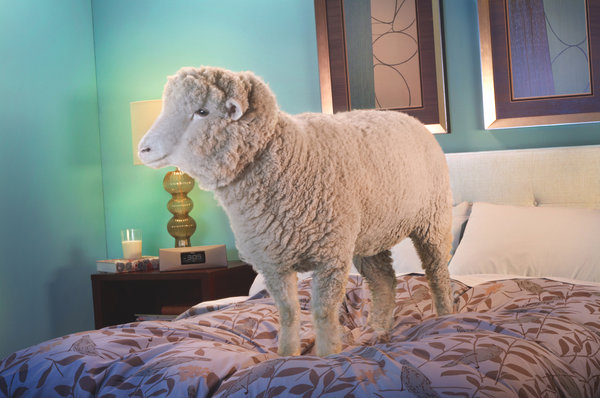
According to an article by Haughney (2012), edited images has changed the realistic nature of the environment where images of " skies are made brighter, animals become flawless, grass is made to look greener and, in a recent issue of Women’s Health, sheep was made to look whiter.

The dog's ear was edited to remove the water particles

The sheep that was edited to make it look whiter
 Credits: New York Times


This is indeed true where all images made to look flawless include non-human subject and the scenery used as image background. In fact, there is a limit to this practice. Under the National Press Photographers Associations (NPPA)'s Code of Ethics, "editing should maintain the integrity of the photographic images' content and context as well as not manipulate images or add or alter sound in any way that can mislead viewers or misrepresent subjects".

Misleading images lead to false news

The type of images which can be edited depends on the context and purpose of the images. News related images cannot be edited as the public depends on the news published. Misleading photographs can create  fake news which will create chaos. News images "can be computer-enchanced only for the purpose of producing the closest possible likeness of what the photographer actually saw" (Irby 2004).

For instance, the recent images of Irene Hurricane which had been Photoshopped created  chaos in the public as it mislead the public about the actual condition which happened in New Jersey.

Credit: Mind Blowing Facts

 Credit : Gregory Michael


The photograph above altered by adding a shark in the water has created a fake news that the Irene Hurricane has swept the dangerous marine life into the neighborhood in New Jersey. The distribution of this image has created fear among those online readers who saw this picture. According to Zennie (2012), the fake images "has spread across social media at a viral pace, shared by tens thousands of shocked people on Facebook and Twitter".


Editors of these photographs probably got the idea from the recent movie, "Bait" where natural disaster had swept sharks into the supermarket.

Credits: Meld Magazine

Editing of images permitted in certain circumstances

On the other hand, images can be edited if the editing does not mislead the readers. For instance, removing the red eye from the photograph captured.

Before red eye removal
After red eye removal


 Image credit: Design Mentor Training

This is because such editing work does not altered or manipulate the original content of the photograph. As shown above, the baby in the 'after red eye removal' image is the same as the before edited image but with the baby's eye fixed. The red eye on the image is due to the flash from the camera being reflected on the eye of the subject. Therefore, editing photographs is permitted when the image is unflattering due to the camera's mechanism fault.

I strongly agree that a border line should be put to the art of editing images. Photojournalist should follow the rules that are bound to them. Such rules are available through the National Press Photographers Association. This is to make all publications credible to the readers and the public who depends on the news. Altering images which change the content means creating false news that cheat the public. This act will cause the publisher and editor of such news to lose their loyal readers and being criticized badly by the public when the truth is known. If the editor insist on publishing extreme altered images to please their eyes and the eyes of the readers, a clause should be put together with the images to tell the readers that the image may not be the same as the real fact. But isn't that telling a lie? Yes. It's up to their decision.


Food Styling, making dishes fit for the camera

Additionally, there is one type of magazine where most of the image captured seems to be unrealistic where the subject of photo shoot is being manipulated or 'arranged' to resemble the real thing. It's the food related magazine and the recipe or cookbooks.

credit: Bon Appetit


Now, have you wondered why the dish that you cooked does not come out as pleasant to the eyes as the one given in the cookbook even through you followed strictly the instructions given? Well, that's because those pictures in the cookbook is styled to look mouthwatering.

Credit: Cannele et vanille
For instance, the food in the image above had been styled where the food is being carefully arranged with the right angle and condiments to make it look appealing.

Such people who are specialize in this field are called 'Food Stylist' and their work deal with 'Food Styling'. Basically, their job is to style the food or dishes to be fit for the camera. According to Manley (2011), food stylist starts their job by buying all the ingredients needed, cook the dish and end with styling it for the camera.

As most of the consumers rely on the pictures when ordering food or when purchasing certain products, the product purchased may not be the same as the ones illustrated. This often resulted in frustrated consumers where they feel that they are being cheated by the advertisements.

Xia Xue, a famous Singaporean blogger has demonstrated the art of styling a raw chicken into an oven roasted chicken.


The raw chicken indeed looks like a cooked roast chicken after being styled. So, the image produced from such production must state a clause that ' the image is for illustration only' and it may not resembled the end product.

Being a wise consumer, we must be alert towards all publications and do not follow or trust blindly what is being advertised.


Reference:

Haughney, C 2012, 'Who Can Improve on Nature? Magazine Editors, New York Times, viewed 31 October 2012, http://www.nytimes.com/2012/07/21/arts/magazine-editors-and-photographers-on-retouching-photos.html?pagewanted=all&_r=0.

Irby, K 2004, 'Austin American-Statesman Photo Manipulation Policy', Poynter, viewed 31 October 2012, <http://www.poynter.org/uncategorized/22849/austin-american-statesman-photo-manipulation-policy/>. 

Manley, R 2011, The Glamorous Life of a Food Stylist, BBC Food, viewed 1 November 2012, <http://www.bbc.co.uk/blogs/food/2011/10/the-glamorous-life-of-a-food-s.shtml>.  

National Press Photographers Associations 2012, NPPA Code of Ethics, viewed 31 October 2012, http://nppa.org/professional_development/business_practices/ethics.html.


Zennie, M 2012, 'Ravaged homes, submerged subways... and now sharks? Sandy spoofs flood the internet', Mail Online, viewed 1 November 2012, <http://www.dailymail.co.uk/news/article-2226091/Sandy-memes-Sharks-post-Sandy-spoof-pictures-flooded-neighborhoods.html>. 


# Warning: The description in this blog may contained information which may not applicable to all users. The owner of the blog is not responsible for any loss cause by any misinterpretation of the content posted.