Showing posts with label celebrity. Show all posts

Friday, November 2, 2012

Privacy law on celebrity's private affairs

Us Weekly, OK! Magazine, Star Magazine, in Touch....


Credits: Living Barefoot and Crazy


Credits: FavTweet 


These are the familiar names of magazine for the readers from the Western countries. 

For the Malaysian readers, I am sure that you have heard of Galaxie magazine.

Credits: Twilighters Malaysia

These magazines put celebrity news as a focus and most of it deal with celebrity's personal life. Publishing contents regarding celebrity personal life may attract a lot of readers but this kind of publishing material may invade their privacy rights. Photographers tried their best to capture photographs and create sensational news from those images to the extent that they hide and use super lenses to capture the celebrity's personal life in their private home and on vacation.

For instance, some French magazines such as Closer and Chi  had published images of Kate Middleton, the Duchess of Cambridge topless when she was on a private vacation with Prince William (Schmidt 2012). This news had created a huge debate over the issue on the privacy laws and privacy rights of individuals.


Credits: Examiner.com


According to Linter (2007, p.172), "violating privacy is still wrong unless outweighed by some vastly compelling public right to know". In this case, Kate Middleton is on her private vacation with her husband and she has the right to keep her private matters from the public. Also, a celebrity's private affairs does not have a compelling public right to know matters.

The actions made by those publications has broken the French privacy law. According to Fraser (2012), "France has a strict privacy law that makes it a criminal offence to publish information on a person's private life without the express permission of the person concerned". Therefore, it is an offence to publish images of celebrity's private without their consent as what those French publications did to Kate Middleton.


Privacy law in Malaysia

Here, in Malaysia; we do have our own privacy laws. According to the recent Federal Court case of Sivarasa Rasiah v Badan Peguam Malaysia & Anor [2010] 3 CLJ 507 at 519. Article 5(1) of the Constitution provides that “No person shall be deprived of his life or personal liberty save in accordance with law" (cited in Foong 2011). Therefore, we have our own rights for our own privacy.

As we Malaysians are more conservative in nature, such cases of publication of private life of  a celebrity do not happen here. Most of our magazines publish news about celebrity on their current and future productions and even where there is news about their private life, the news are mostly derived from the celebrity's own public announcement.


Reference:
Foong, CL 2011, Right to privacy in Malaysia: Do we have it?, Malaysian Insider, viewed 1 November 2012, http://www.themalaysianinsider.com/breakingviews/article/right-to-privacy-in-malaysia-do-we-have-it-foong-cheng-leong-loyarburok.com.

Fraser, C 2012, Analysis: Are French privacy laws really strict?, BBC News, viewed 1 November 2012, http://www.bbc.co.uk/news/world-europe-19595796.

Linter, K 2007, Global Regulatory Issues for the Cosmetics Industry, Elsevier Inc, United States of America.

Schmidt, RH 2012, Royal Exposure: How much privacy should Kate and Harry expect?, Examiner.com, viewed 1 November 2012, <http://www.examiner.com/article/royal-exposure-how-much-privacy-should-kate-and-harry-expect>.


# Warning: The description in this blog may contained information which may not applicable to all users. The owner of the blog is not responsible for any loss cause by any misinterpretation of the content posted.

Thursday, November 1, 2012

The Art of editing and altering images

Today, all types of publications such as magazines use edited and perfected photographs only as part of its norms and practices. Readers are being exposed to those images continuously throughout their life that they don't realize that it is being altered from the original but accepted that as a good standard of quality photographs taken. This has raised the issue of ethics in editing images where is there a boundary to this practices.

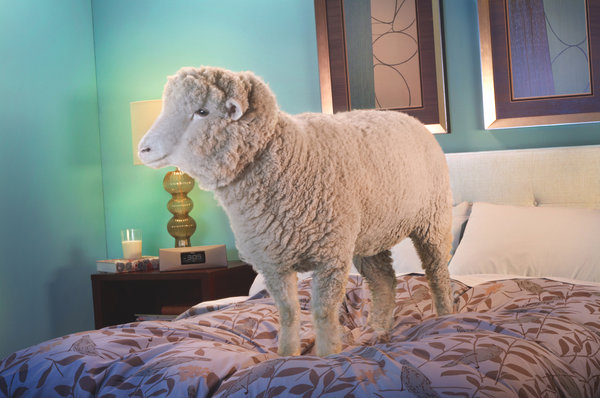
According to an article by Haughney (2012), edited images has changed the realistic nature of the environment where images of " skies are made brighter, animals become flawless, grass is made to look greener and, in a recent issue of Women’s Health, sheep was made to look whiter.

The dog's ear was edited to remove the water particles

The sheep that was edited to make it look whiter
 Credits: New York Times


This is indeed true where all images made to look flawless include non-human subject and the scenery used as image background. In fact, there is a limit to this practice. Under the National Press Photographers Associations (NPPA)'s Code of Ethics, "editing should maintain the integrity of the photographic images' content and context as well as not manipulate images or add or alter sound in any way that can mislead viewers or misrepresent subjects".

Misleading images lead to false news

The type of images which can be edited depends on the context and purpose of the images. News related images cannot be edited as the public depends on the news published. Misleading photographs can create  fake news which will create chaos. News images "can be computer-enchanced only for the purpose of producing the closest possible likeness of what the photographer actually saw" (Irby 2004).

For instance, the recent images of Irene Hurricane which had been Photoshopped created  chaos in the public as it mislead the public about the actual condition which happened in New Jersey.

Credit: Mind Blowing Facts

 Credit : Gregory Michael


The photograph above altered by adding a shark in the water has created a fake news that the Irene Hurricane has swept the dangerous marine life into the neighborhood in New Jersey. The distribution of this image has created fear among those online readers who saw this picture. According to Zennie (2012), the fake images "has spread across social media at a viral pace, shared by tens thousands of shocked people on Facebook and Twitter".


Editors of these photographs probably got the idea from the recent movie, "Bait" where natural disaster had swept sharks into the supermarket.

Credits: Meld Magazine

Editing of images permitted in certain circumstances

On the other hand, images can be edited if the editing does not mislead the readers. For instance, removing the red eye from the photograph captured.

Before red eye removal
After red eye removal


 Image credit: Design Mentor Training

This is because such editing work does not altered or manipulate the original content of the photograph. As shown above, the baby in the 'after red eye removal' image is the same as the before edited image but with the baby's eye fixed. The red eye on the image is due to the flash from the camera being reflected on the eye of the subject. Therefore, editing photographs is permitted when the image is unflattering due to the camera's mechanism fault.

I strongly agree that a border line should be put to the art of editing images. Photojournalist should follow the rules that are bound to them. Such rules are available through the National Press Photographers Association. This is to make all publications credible to the readers and the public who depends on the news. Altering images which change the content means creating false news that cheat the public. This act will cause the publisher and editor of such news to lose their loyal readers and being criticized badly by the public when the truth is known. If the editor insist on publishing extreme altered images to please their eyes and the eyes of the readers, a clause should be put together with the images to tell the readers that the image may not be the same as the real fact. But isn't that telling a lie? Yes. It's up to their decision.


Food Styling, making dishes fit for the camera

Additionally, there is one type of magazine where most of the image captured seems to be unrealistic where the subject of photo shoot is being manipulated or 'arranged' to resemble the real thing. It's the food related magazine and the recipe or cookbooks.

credit: Bon Appetit


Now, have you wondered why the dish that you cooked does not come out as pleasant to the eyes as the one given in the cookbook even through you followed strictly the instructions given? Well, that's because those pictures in the cookbook is styled to look mouthwatering.

Credit: Cannele et vanille
For instance, the food in the image above had been styled where the food is being carefully arranged with the right angle and condiments to make it look appealing.

Such people who are specialize in this field are called 'Food Stylist' and their work deal with 'Food Styling'. Basically, their job is to style the food or dishes to be fit for the camera. According to Manley (2011), food stylist starts their job by buying all the ingredients needed, cook the dish and end with styling it for the camera.

As most of the consumers rely on the pictures when ordering food or when purchasing certain products, the product purchased may not be the same as the ones illustrated. This often resulted in frustrated consumers where they feel that they are being cheated by the advertisements.

Xia Xue, a famous Singaporean blogger has demonstrated the art of styling a raw chicken into an oven roasted chicken.


The raw chicken indeed looks like a cooked roast chicken after being styled. So, the image produced from such production must state a clause that ' the image is for illustration only' and it may not resembled the end product.

Being a wise consumer, we must be alert towards all publications and do not follow or trust blindly what is being advertised.


Reference:

Haughney, C 2012, 'Who Can Improve on Nature? Magazine Editors, New York Times, viewed 31 October 2012, http://www.nytimes.com/2012/07/21/arts/magazine-editors-and-photographers-on-retouching-photos.html?pagewanted=all&_r=0.

Irby, K 2004, 'Austin American-Statesman Photo Manipulation Policy', Poynter, viewed 31 October 2012, <http://www.poynter.org/uncategorized/22849/austin-american-statesman-photo-manipulation-policy/>. 

Manley, R 2011, The Glamorous Life of a Food Stylist, BBC Food, viewed 1 November 2012, <http://www.bbc.co.uk/blogs/food/2011/10/the-glamorous-life-of-a-food-s.shtml>.  

National Press Photographers Associations 2012, NPPA Code of Ethics, viewed 31 October 2012, http://nppa.org/professional_development/business_practices/ethics.html.


Zennie, M 2012, 'Ravaged homes, submerged subways... and now sharks? Sandy spoofs flood the internet', Mail Online, viewed 1 November 2012, <http://www.dailymail.co.uk/news/article-2226091/Sandy-memes-Sharks-post-Sandy-spoof-pictures-flooded-neighborhoods.html>. 


# Warning: The description in this blog may contained information which may not applicable to all users. The owner of the blog is not responsible for any loss cause by any misinterpretation of the content posted.
Monday, September 17, 2012

Every bloggers is unique

As said in the previous post that the number of bloggers is increasing, these bloggers have come out with very unique blogs and inspirations which is hard to be classified as they may fit into two or more categories at the same time. This lead to more types of classifications being created and sometimes they contradict with each other.

Classification of blogs

This post will analyse two very different ways of blog classification, one by Margaret Simons while another one by Barefoot and Szabo. 

Margaret Simons's taxonomy of blogs

Margaret Simons

Margaret Simons is “an award-winning freelance journalist and the author of numerous books and essays” (Margaret Simons 2012). An interview through ABC Radio National by Antony Funnell on 25 September 2008, Margaret came out with 9 types of blogs as follows:
  1. Pamphleteering blogs: blogs covering multiple topics which are written by more than one authors who express their own views towards the topic of discussion.
  2. Digest blogs: blogs which collect, compile and publish information from various sources regarding various topics. These types of blogs also serve as a connector between the search engine and the real data source.
  3. Advocacy blogs: blogs which discuses and emphasizes on a particular point of view towards an area of a topic by a group of people with the same interest.
  4. The Popular Mechanics blogs: blogs which serves as a learning site which shows a step-by-step process to make certain products or to solve problems.
  5. The Exhibition blogs: blogs which publishes artworks by people in the creative field such as photographers, artist, poetry and writers.
  6. Gatewatcher blogs: blogs which served to critique the media’s reporting by bloggers who are expert in their own field of commenting on the issue. 
  7.  The Diary: blogs which talks about the blogger’s own personal life such as happenings in their daily life. 
  8.  The Advertisement: blogs which talks about the functions and benefits of a product which is meant to attract readers of the blog to the product advertised.
  9.  News Blogs: blogs which served to provide news to the readers just like how newspaper served as a news provider.

The classification by Margaret distinguishes on the content of the blogs in details. 


Barefoot & Szabo's views on different types of blog 

Friends with Benefits by Barefoot & Szabo

On the other hand, Barefoot & Szabo (2010, p.48) classified blogs into “personal, topical and corporate blogs”. This is a more general type of classification compared to Margaret’s.  


Personal Blogs

Personal blogs are written based on blogger's own personal stories and happenings in their life. These blogs cover a variety of topics or chapters which intertwined with blogger’s daily life.  For instance, the blog posts in a personal blog may be divided further into topics such as fashion, food, travel, and shopping. This type of blog is often being seen as an online diary and the content of the blog consist of an informal style of writing with blogger’s personal jargon and emotion icon.  

Interesting personal blog:


ShinyShampoo's blog

ShinyShampoo features interesting stories happening in her life. I have been following her blog since my secondary school days as her determination with a positive attitude towards every happenings in life is a good example to be learned. The stories in the blog also teaches a quote which is 'No Ugly people, only LAZY people' which was experienced by the blogger herself. Her strong determination and belief to this quote had changed herself to who she is today.


Other interesting personal blogs:


Topical Blogs

Topical blogs “covers a particular topic [such as cars and health] which is more journalistic in nature” (Barefoot & Szabo 2010, p.48). This content of these blogs falls on a particular subject of discussion and it can be expressed in a formal and informal way. The bloggers who falls in this category are usually very passionate on the subject of discussion. Readers who search for certain information online or views on certain subject matter is very likely to visit these types of blog to obtain information.


Food Recipes blog:


Elinluv's Tidbits Corner blog
Elinluv's Tidbits Corner contains reliable recipes where the result of the cooking will be achieved as shown on the blog when the steps given is followed precisely. This is because I had try most of the recipes from the blog for my cooking.

Other reliable food recipes blogs:


Tourism Blog:

Vkeong's blog

Vkeong's blog features a mixture reviews of food, hotels and interesting places to travel to. Readers will be able to find some good place to dine around them but unknown to many. 

Other tourism/travel blogs:

Corporate Blog

Corporate blog “are sponsored by a company or one of its brands and maintained by one or more of the company’s employees” (Lamb, Hair & McDaniel 2010, p.481). The content of a corporate blog use a formal language its writing and the design of the blog often followed the company’s publication in other forms. This is done by using the same logo, colour and layout in other publication forms such as from printed pamphlets in the blog design to enable readers identify the organization or brand which readers are searching for. This consistency in the organization’s publication will ensure readers remember an organization’s promotion and publication activities which will not confuse them.
Samples of corporate blogs:

Disney Park's Blog
Disney Park's blog features events and happenings on Disney's owned parks all around the world. Readers can get updates on things happen in the parks by accessing one website. 


Other Malaysian corporate blogs
 

Blogs in reality...

Both views on classification of blogs are right where they both have their own way of seeing things. However, both author’s view in classifying can be combined together to be more realistic and applicable. From my point of view, a majority of the blogs are a combination of personal and topical blogs. This can be seen where topical blogs which blogs deeply about a particular topic does include the blogger’s own personal lives in some postings. For instance, a blogs on travel does include their personal post sometimes. This is to make the blog more engaging to the readers and such blogs can gain high blog followers. Readers are curious about the personal lives of the blog owner and it attracts them to keep following their blog when there are personal posting on it. Therefore, I suggest to classify blogs based on the content and the overall outlook of the blog.

The definition of personal blog should not only deal with personal things but also include some content of topical blog where the blogger may be interested in beauty and fashion and half of the post goes into that field. That blog could also include field of 'the mechanics blog' where it could teach a step-by-step tutorial on makeup. Consistently, it also served as an advertisement blog and news blog where the posting on product reviews and launches is made. In reality, these bloggers managed to attract readers to follow them who made them a celebrity such as the famous 'Cheeserland' and 'XiaXue'.


References:

ABC Radio National 2008, 'A taxonomy of blogs', viewed 17 September 2012, < http://www.abc.net.au/radionational/programs/mediareport-1999/a-taxonomy-of-blogs/3186686>.

Barefoot, D & Szabo, J 2010, Friends with benefits: A social media marketing handbook, No Starch Press Inc, San Francisco.

Lamb, CW, Hair, JF & McDaniel, C 2010, Marketing, 10th edn, South-Western Cengage Learning, United States of America.

Margaret Simons 2012, “About Margaret”, viewed17 September 2012, <http://margaretsimons.com.au/?page_id=2>.


# Warning: The description in this blog may contained information which may not applicable to all users. The owner of the blog is not responsible for any loss cause by any misinterpretation of the content posted.