Showing posts with label food. Show all posts

Thursday, November 1, 2012

The Art of editing and altering images

Today, all types of publications such as magazines use edited and perfected photographs only as part of its norms and practices. Readers are being exposed to those images continuously throughout their life that they don't realize that it is being altered from the original but accepted that as a good standard of quality photographs taken. This has raised the issue of ethics in editing images where is there a boundary to this practices.

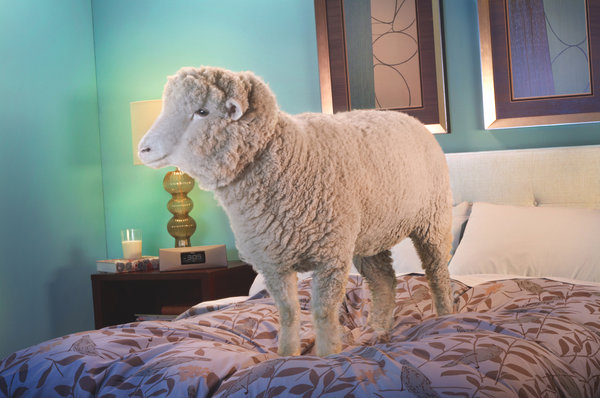
According to an article by Haughney (2012), edited images has changed the realistic nature of the environment where images of " skies are made brighter, animals become flawless, grass is made to look greener and, in a recent issue of Women’s Health, sheep was made to look whiter.

The dog's ear was edited to remove the water particles

The sheep that was edited to make it look whiter
 Credits: New York Times


This is indeed true where all images made to look flawless include non-human subject and the scenery used as image background. In fact, there is a limit to this practice. Under the National Press Photographers Associations (NPPA)'s Code of Ethics, "editing should maintain the integrity of the photographic images' content and context as well as not manipulate images or add or alter sound in any way that can mislead viewers or misrepresent subjects".

Misleading images lead to false news

The type of images which can be edited depends on the context and purpose of the images. News related images cannot be edited as the public depends on the news published. Misleading photographs can create  fake news which will create chaos. News images "can be computer-enchanced only for the purpose of producing the closest possible likeness of what the photographer actually saw" (Irby 2004).

For instance, the recent images of Irene Hurricane which had been Photoshopped created  chaos in the public as it mislead the public about the actual condition which happened in New Jersey.

Credit: Mind Blowing Facts

 Credit : Gregory Michael


The photograph above altered by adding a shark in the water has created a fake news that the Irene Hurricane has swept the dangerous marine life into the neighborhood in New Jersey. The distribution of this image has created fear among those online readers who saw this picture. According to Zennie (2012), the fake images "has spread across social media at a viral pace, shared by tens thousands of shocked people on Facebook and Twitter".


Editors of these photographs probably got the idea from the recent movie, "Bait" where natural disaster had swept sharks into the supermarket.

Credits: Meld Magazine

Editing of images permitted in certain circumstances

On the other hand, images can be edited if the editing does not mislead the readers. For instance, removing the red eye from the photograph captured.

Before red eye removal
After red eye removal


 Image credit: Design Mentor Training

This is because such editing work does not altered or manipulate the original content of the photograph. As shown above, the baby in the 'after red eye removal' image is the same as the before edited image but with the baby's eye fixed. The red eye on the image is due to the flash from the camera being reflected on the eye of the subject. Therefore, editing photographs is permitted when the image is unflattering due to the camera's mechanism fault.

I strongly agree that a border line should be put to the art of editing images. Photojournalist should follow the rules that are bound to them. Such rules are available through the National Press Photographers Association. This is to make all publications credible to the readers and the public who depends on the news. Altering images which change the content means creating false news that cheat the public. This act will cause the publisher and editor of such news to lose their loyal readers and being criticized badly by the public when the truth is known. If the editor insist on publishing extreme altered images to please their eyes and the eyes of the readers, a clause should be put together with the images to tell the readers that the image may not be the same as the real fact. But isn't that telling a lie? Yes. It's up to their decision.


Food Styling, making dishes fit for the camera

Additionally, there is one type of magazine where most of the image captured seems to be unrealistic where the subject of photo shoot is being manipulated or 'arranged' to resemble the real thing. It's the food related magazine and the recipe or cookbooks.

credit: Bon Appetit


Now, have you wondered why the dish that you cooked does not come out as pleasant to the eyes as the one given in the cookbook even through you followed strictly the instructions given? Well, that's because those pictures in the cookbook is styled to look mouthwatering.

Credit: Cannele et vanille
For instance, the food in the image above had been styled where the food is being carefully arranged with the right angle and condiments to make it look appealing.

Such people who are specialize in this field are called 'Food Stylist' and their work deal with 'Food Styling'. Basically, their job is to style the food or dishes to be fit for the camera. According to Manley (2011), food stylist starts their job by buying all the ingredients needed, cook the dish and end with styling it for the camera.

As most of the consumers rely on the pictures when ordering food or when purchasing certain products, the product purchased may not be the same as the ones illustrated. This often resulted in frustrated consumers where they feel that they are being cheated by the advertisements.

Xia Xue, a famous Singaporean blogger has demonstrated the art of styling a raw chicken into an oven roasted chicken.


The raw chicken indeed looks like a cooked roast chicken after being styled. So, the image produced from such production must state a clause that ' the image is for illustration only' and it may not resembled the end product.

Being a wise consumer, we must be alert towards all publications and do not follow or trust blindly what is being advertised.


Reference:

Haughney, C 2012, 'Who Can Improve on Nature? Magazine Editors, New York Times, viewed 31 October 2012, http://www.nytimes.com/2012/07/21/arts/magazine-editors-and-photographers-on-retouching-photos.html?pagewanted=all&_r=0.

Irby, K 2004, 'Austin American-Statesman Photo Manipulation Policy', Poynter, viewed 31 October 2012, <http://www.poynter.org/uncategorized/22849/austin-american-statesman-photo-manipulation-policy/>. 

Manley, R 2011, The Glamorous Life of a Food Stylist, BBC Food, viewed 1 November 2012, <http://www.bbc.co.uk/blogs/food/2011/10/the-glamorous-life-of-a-food-s.shtml>.  

National Press Photographers Associations 2012, NPPA Code of Ethics, viewed 31 October 2012, http://nppa.org/professional_development/business_practices/ethics.html.


Zennie, M 2012, 'Ravaged homes, submerged subways... and now sharks? Sandy spoofs flood the internet', Mail Online, viewed 1 November 2012, <http://www.dailymail.co.uk/news/article-2226091/Sandy-memes-Sharks-post-Sandy-spoof-pictures-flooded-neighborhoods.html>. 


# Warning: The description in this blog may contained information which may not applicable to all users. The owner of the blog is not responsible for any loss cause by any misinterpretation of the content posted.

Wednesday, September 19, 2012

Food reviews on blogs as an advertising medium

As said in the previous post that blogs have served as a news platform for readers who create a need to identify credible blogs to rely on. This change in habit of obtaining news occurs everywhere around the world especially among young people. According to a study conducted by Pew (cited in Biagi 2012, p.263), "there is a large numbers of Americans under age 30 turned to the Internet for news and [surprisingly] in fact people of all ages read the news online".

Print documents given to the public is a waste

This phenomenon has lead to organizations trying to reach its consumers and potential consumers online instead of the traditional advertisements through television, newspapers and printed brochures, pamphlets and flyers. The traditional way of advertising is not effective in reaching its audiences as they find a way to avoid advertisements.

Very often, flyers and brochures given to the public whenever they pass by the shop or promotion booth are wasted as they are purposely being left at the venue or thrown into the dustbin without looking at them. This is due to either the receiver of the printed promotional materials being a wrong person targeted or they are bored with the documents itself as they have seen it many times. Sometimes, it is because the public does not like to hold a stack of brochures or pamphlets when walking around especially in a shopping mall where most of the shops will have flyers to be given away.

This bad habits do not only revolves around Malaysians but also people in other countries as well. In Singapore, pamphlets and brochures are also being left or thrown on the event floor before the visitors leave the event venue. STOMP has reported about the mess left by the visitors after the Singapore IT Fair 2011 at Suntec city.

Mess after Singapore IT Fair 2011 at Suntec city by STOMP


Advertising through blogs is effective

Organizations have come out with the way of reaching its audiences which is through blogs and it is more effective. The advertisement on blogs comes in the form of 'review post' or 'advertorial'. Sometimes, bloggers do not differentiate the review post with their own personal post but putting it together in one blog post. A research conducted shows that "81% of shoppers who spends more than $500 online each month use products reviews when they make buying decisions" (Solomon, Cornell & Nizan 2010, p.215).


Advertising on blogs is vital for organizations in F&B industry

This new form of advertising and promotions is applied fully by all organizations dealing with food products which includes restaurants and cafes. In the past, we are stuffed with flyers of new menu offered or opening of new restaurants when we are out in town or even in our mail box at home. Also, we often see a food review section on the weekend edition of the newspaper. However, they are seen as not effective where as said, flyers are being thrown away. Additionally, Bridgeland & Zahavi (2009, p.201) mentioned that "newspapers reviews have gradually lost much of their former influence". Therefore, the advertising trend had changed from print documents to on-screen documents which is through blogs.

 Getting the food reviews on blogs

Usually, high traffic and well known bloggers are contacted by the Marketing team of organizations when there is a new introduction of products or new promotions offered. Then, bloggers will be invited to a special bloggers gathering or private event where they will be briefed about the products or promotion with samples of the products given to them followed by a photography session of the products. The details of the functions held vary depending on the types of organizations.


Advertisements of Mooncakes through brochures


Benefits of advertising through blogs 

This changed in trends had proven to be a success. Bridgeland & Zahavi (2009, p.201) supported that "now customers typically find good restaurants via the Internet reviews of other customers, by local dining blogs or by professional review books like Zagat and Michelin guides".

Due to the emergence of young people following blogs for news or simply being a fan of the blog, advertisement through blogs is able to reach the audiences as they do not reject or avoid blog post being posted on the blogs they follow even though it is a form of advertisement. This new trend had helped organizations targeting their products to young people even though the products may not appeal to young people in the olden days. 

Blog advertisements changed reader's behavior

This new form of following food reviews on blogs has typically changed young people's behavior. They are willing to drive more than 30 minutes and sometimes an hour to the restaurants reviewed on blogs. People also travel to other states of the country especially in Malaysia just to try the local food there which they saw on food blogs. This has made them travel and purchase goods which people around their age would not go or buy in the past.

For instance, young people today knows a lot about traditional or festival food such as Mooncakes. In the past, they do not care to take a look at the Mooncakes booth but today, they just go straight to the particular shop and placed their order. This is because Mooncakes reviews are everywhere on the internet by food bloggers. Organizations offering the product had get the bloggers to review their products way before they are launched in public. 


Dragon-i Mooncakes review on XiangCool.com

Dragon-i Mooncake review on Chasing Food Dreams


Dragon-i Restaurant has host a blogger gathering on its Mooncakes offering. As shown above, two different blogs which are XiangCool.com and Chasing Food Dreams reviewing Dragon-i's mooncakes promotion.


ParkRoyal Kuala Lumpur's Mooncakes review on Big Boys Oven

Other organizations such as ParkRoyal Kuala Lumpur uses this advertising strategy too where its review on its Mooncakes are reviewed by bloggers on their blogs as shown on Big Boy Oven's blog above. 


This new trend of food review had cause many food blogs to appear on the Internet as well as online network specialized in food reviews where the general public can post review of any restaurants which they visited on the network by becoming a member which is free of charge. The emergence of these food review networks has helped organizations in this field in a form of free advertisements besides gaining popularity. Examples of Food Network in Malaysia are shown below.


Malaysia Most Wanted FOOD network


Dine Malaysia.com network


Open Rice Malaysia network


The emergence of food networks are also happening in other countries such as in Hong Kong and Singapore as shown below.


Open Rice Hong Kong network


Hungry go Where Singapore network


References:

Biagi, S 2012, Media Impact: An introduction to mass media, 10th edn, Wadsworth Cengage Learning, United States of America.

Bridgeland, D & Zahavi, R 2009, Business Modeling: A practical guide to realizing business value, The MK/OMG Press, United States of America. 

Solomon, M, Cornell, L & Nizan, A 2010, Launch! Advertising and Promotion in Real Time, Flat World Knowledge Inc, New York.


# Warning: The description in this blog may contained information which may not applicable to all users. The owner of the blog is not responsible for any loss cause by any misinterpretation of the content posted.

Tuesday, September 18, 2012

Building a Credible Blog

The current trend of marketing through social media and blogs makes readers rely heavily on blogs for the latest information and happenings. This applies especially to blogs which served as tutorial to the readers, as a news platform and corporate blogs. Therefore, blogs need to be credible to its users.

A credible blog in the minds of readers

Readers of blogs are clever users and they have their own definition of a reliable and credible blog. Readers thinks that the blogs are credible when :

1. they felt that the bloggers have expertise in the area in which they are writing about (Taylor 2006, p.32).

2. "interactive elements are put on a site" (Sundar cited in Finn & Zuniga 2011, p.3)

3. "online information are authored by males than by females" (Armstrong & McAdam cited in Finn & Zuniga 2011, p.3).


How to identify a credible blog

Moreover, Waldeck, Kearney & Plax (2012, p.153) has come out with a table teaching readers to identify a credible blog. According to them, readers should trust the site when:

1. "the website is maintained by government agencies, professional organizations and established news organizations".


A blog by Airasia.

The blog by Airasia above is a credible blog as it is maintained by a well-known organization. Recognizing an organization maintained blog is easy as there is a huge organization logo or brand name at the top part of the webpage such as the 'AIRASIA' logo and pictures on top of the blog. 


2. "when the website is updated frequently"

The side bar of Airasia's blog
Looking at the Airasia's blog under 'Archives' above, the blog has been updated a few times every month and this shows that the blog is well maintained. By looking at the numerous updates from the blog, it confirms that the blog is reliable besides being governed by a well known organization.


3. "authors or sponsors who [does not] have a financial interest in a topic [may]... provide unbiased information about that topic" 


The links to Write a Blog Post on Airasia's blog

Referring to the blog post on Airasia's blog, although it does post information which is of Airasia's interest such as promotion and reviews of places to visit by Airasia; it does not provide a bias information as the blog post is also posted up by Airasia's customers on their travel feedback. For instance, the latest blog post review on travel experience is posted by 'Gerald' with the post entitled 'A Repeat Journey to Malaysia, Laos, Thailand and Indonesia'.

To post a blog post on Airasia's blog, customers have to register an account on Airasia's blog and click the 'Write a Blog Post' icon at the top part of the page near the 'Home' button as shown above. 


4.  "information on the website is validated by multiple sources"

When the link to that particular website is found through other sources, then that particular website is likely to be credible. 


Guide to create a credible blog:

From the reader's perspective above, bloggers need to meet reader's expectation of a credible blog by fulfilling all the criteria that readers will perceive a blog as credible. Therefore, blogs need to:

1. be updated as frequently as possible with good information. 

This is also supported by Meyerson (2010, p.172) where bloggers need to "consistently write fresh content two to three times a week that educate, entertains, engages and enriches their readers".


2.  "disclose any information if the blogs are paid to endorse the products by the manufacturer" (Felder 2012, p.148).


Disclaimer at the bottom of Le3nuts.shopper's blog


An example of 'disclaimer' on Sinfully Delicious's blog


Any reviews on products or places should disclose any benefits received by bloggers to avoid any bias information obtained by readers. Bloggers could put a 'Disclaimer' mentioning that the information posted is based on own judgement at the end of every reviews posted or highlight it in the blog layout as shown in Le3nuts.shopper's blog above or even put a link on the blog to link to a new page showing the 'Disclaimer' with details as shown on Sinfully Delicious's blog above.


3.  "have trackback, blogrolls, and links allow for visible demonstration of networked credibility" (Marlow cited in Finn & Zuniga 2011, p.4).

An example of a blogroll on Table For 2's blog


Bloggers should put credible links and widgets on the sidebar as well as top bar of the blog to show that bloggers are passionately involving themselves in the blogging world and therefore unlikely to give untrue information.

Bloggers could put a 'blogroll' on their blog to show the online events and activities which they had participated in. For instance, the Foodie BlogRoll on Table For 2's blog shows that the blogger had participated in The Green Leaf's and Bananas promotion together with other communities in the Foodie BlogRoll which is also joined by other 14760 blogs. Therefore, it also shows that the blog is linked by others blog to ensure the credibility of the blog.


Besides that, bloggers could also join some blog advertising community such as Nuffnang and Advertlets which is famous in Malaysia.

An example of a blog advertising community link on Four Feet Nine's blog.


A Carlsberg advertisement by Nuffnang on Emily's blog.

By joining these blogging community, bloggers would be able to place well known organization's advertisement on their blog to further assure that it is a credible blog besides being linked to many bloggers in the blogging community.

Furthermore, bloggers could also gain access to product launches and movie preview through these blog advertising communities which helped them to be able to serve as a news provider in terms of new product reviews to the others. This further improves blog credibility besides increasing a blog's followers.


A snapshot of comments replied (the comments in light blue box with pictures icon)by the owner of the blog KampungBoyCityGirl

Bloggers need to engage with the readers by replying to their comments so that readers feel the presence of the bloggers besides answering any reader's doubt. For instance, the owner of the blog KampungBoyCityGirl which is a Malaysia food and travel blog replies to its readers very often as shown in the snapshot above in terms of any queries regarding the places they travel to and how to travel there.


Snapshot of A Whiff of Lemongraff's blog on the 'About this blog' section and the 'recent comments' section.

Moreover, a column of 'Recent Comments' on the sidebar of the blog could also encourage readers to comment as it shows that the comments are acknowledged by the blogger of the blog. As shown on the snapshot of A Whiff of Lemongrass blog above, the comments by readers and replies by the blog owner are clearly visible and it adds credibility to the blog. It also shows professionalism of the blog owner.


5. "include a short bio and add [precise] information in the 'About' section" (Felder 2012, p.149).

the 'About' section on CC Food Travel's blog.

Having a precision in the 'About' section of the blog will ensure readers know what is the topic of discussion of the blog and who are the contributors as well as the owner of the blog. This will ensure readers that they had found the right blog for information and knowing the contributors means that the information on the blog is credible as the owners reviewing themselves to give a feeling of responsibility over the content posted on the blog.

Furthermore, the snapshot of 'A Whiff of Lemongrass' above shows a good way of displaying the 'About the blog' section where a short and precise information about the blog is stated right at the homepage of the blog.


It is important for both readers and bloggers to know the elements of a credible blog to ensure mutual benefits of both parties.


Here are some blogs which are credible and reliable in the contents posted.

Enjoy...


Kenny Sia.
The Kenny Sia blog had won 'The Best Micro-Blog' and also a finalist in the 'Best Travel Blog' category in Nuffnang Asia-Pacific Blog Awards 2011. The blog had a mixture of product and places reviews as well as posting on sensational news.


Big Boys Oven.


The Big Boys Oven blog features restaurants review and creation of designer cakes by one of the blog owner, Sunny Yau. This blog had appeared numerous times in newspapers and magazines due to the unique designer cakes creation. As Sunny Yau's desserts often appear in the corporate functions, the blog is well known by most professional in the corporate organizations.


KampungBoyCityGirl


The blog KampungBoyCityGirl features useful travel guide for self-organized overseas travel trips. I personally had used their Hong Kong travel guide when I organized my own trip to Hong Kong where all information posted is reliable and can lead us to our destination. Also, they replied to any queries very frequent that we can ask them anything about the guide if we don't understand.  


Hope those recomended websites are useful!


References:

Felder, L 2012, Writing for the Web: creating compelling web content using words, pictures and sounds, New Rides, United States of America.

Finn, J & Zuniga, HG 2011, Online Credibility and Community among blog users, ASIST, United States of America, viewed 18 September 2012, < http://www.asis.org/asist2011/proceedings/submissions/110_FINAL_SUBMISSION.pdf>.

Meyerson, M 2010, Success Secrets of Social Media Marketing Superstars, Jere L.Calmes, Canada.  

Taylor, H 2006, The Executive Blog as a Communication Tool, ProQuest, United States of America.  

Waldeck, J, Kearney, P & Plax, T 2012, Business and Professional Communication in a Digital Age, Wadsworth Cengage Learning, Canada. 


# Warning: The description in this blog may contained information which may not applicable to all users. The owner of the blog is not responsible for any loss cause by any misinterpretation of the content posted.